
Moving in pursuit of the loving divine: our conversation with performer Ghazal Azarbad and Associate Director Keith T. Fernandez
By Darragh Kilkenny-Mondoux
February 5, 2026
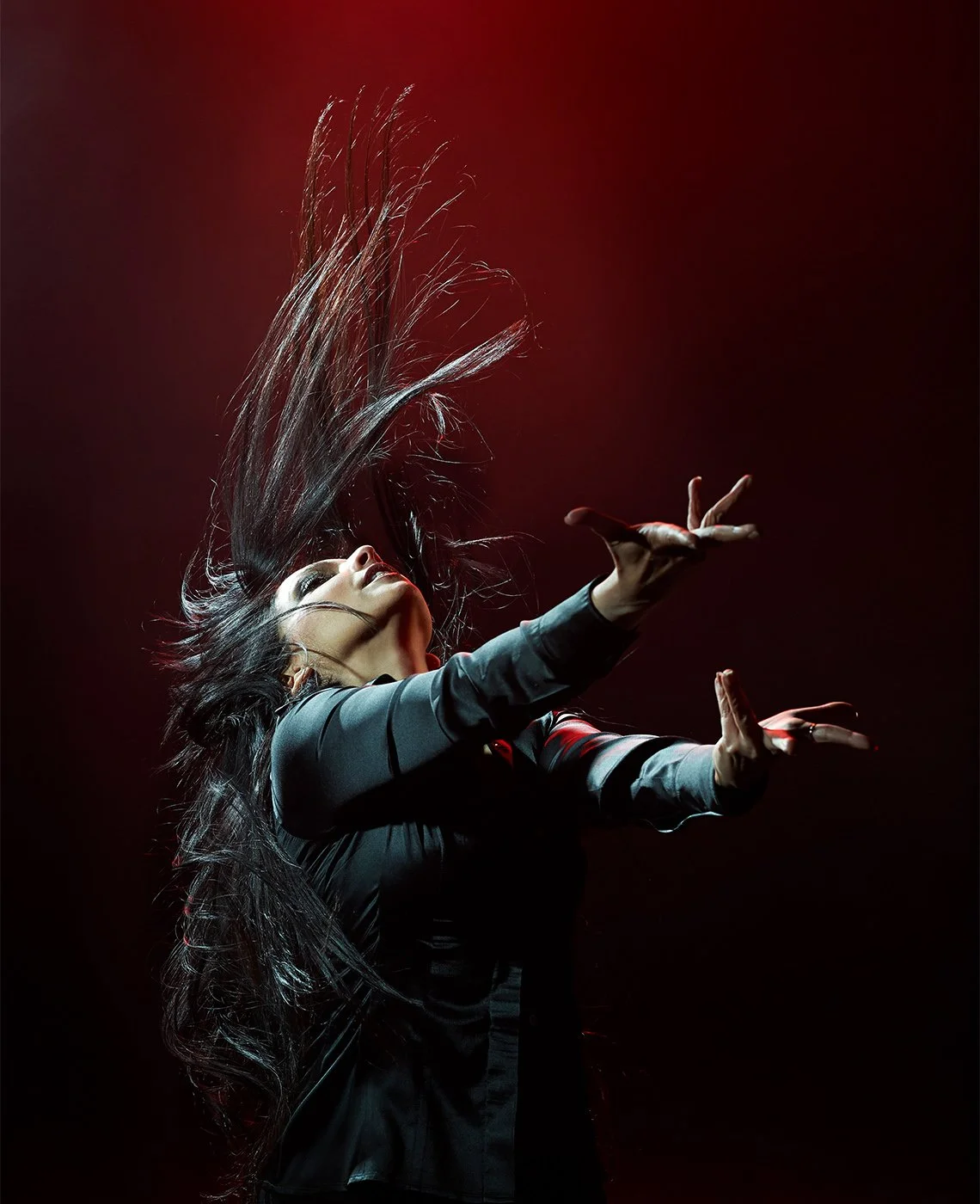
‘Crash’ by Pamela Mala Sinha, presented by Imago Theatre, starring Ghazal Azarbad, directed by Krista Jackson, associate direction by Keith T. Fernandez, at the Segal Centre for the Performing Arts Studio, February 11 to February 22, 2026.
Returning to the scene of the crash
“This story takes place in Montreal, and it is autobiographical,” comes the qualifier by actor Ghazal Azarbad. “There's something about bringing the story to life in the city that it took place in. That is really special.”
And so a Montreal story premieres in the city where it happened. Azarbad is the first actor to step into the role of The Girl, the sole performer of Pamela Mala Sinha’s debut solo show Crash besides the playwright herself. Sinha originally premiered this piece a decade ago at Theatre Passe Muraille in Toronto, which was lauded with four Dora Awards, including Outstanding New Play.
This production is a return for Azarbad, as well as for Crash and company. Segal-going audiences will recall Azarbad’s turn as Elham in the mainstage production of the much-celebrated show English in 2023. The studio space, however, seems to embrace the nature of Crash perfectly. “The intimacy of this space was incredibly important when we were imagining how the show was going to be, how the story was going to be told,” explains Keith T. Fernandez, Associate Director. “And so, with the way that the set is so integrated into the audience – the intimacy of that is going to be really gorgeous. It feels like the perfect space.”
On dance
Crash is told through monologue and movement by its central heroine, The Girl. The heart of the narrative is based on Pamela Mala Sinha’s lived experience, while the dance which tells the story comes to her from her mother, storyteller Rubena Sinha, who you can hear performing Crash’s companion piece audio play “River”
The choreography is in the traditional Hindu dance form Bharatanatyam, a highly specific, codified, and fundamentally narrative-driven form of classical dance. Fernandez made sure to share the specifics. “It’s from the Tamil Nadu region of the South of India. It's extremely culturally specific. It's over 20 centuries old!” he explains with a chuckle.
“The mythology that we're sharing through that dance is Hindu mythology, but they're universal stories that we all have a way into, and then we relate it all back to the story within Crash”.
“Movement was the first thing that was built into the process. Even before we started text work, we got the movement pieces down,” Azarbad recounts, while clarifying she does not identify as a dancer and has no prior formal training in dance. Never mind the hyper-specific dance tradition she is performing in this piece. “It's original choreography from Pamela's mother who then passed it on to Pamela, who now is passing it on to me, and so it feels like something that is in her family's tradition.” The weight of this adaptation has to feel immense for an actor, though perhaps offset by the rare loving process of being coached by a mother and daughter.
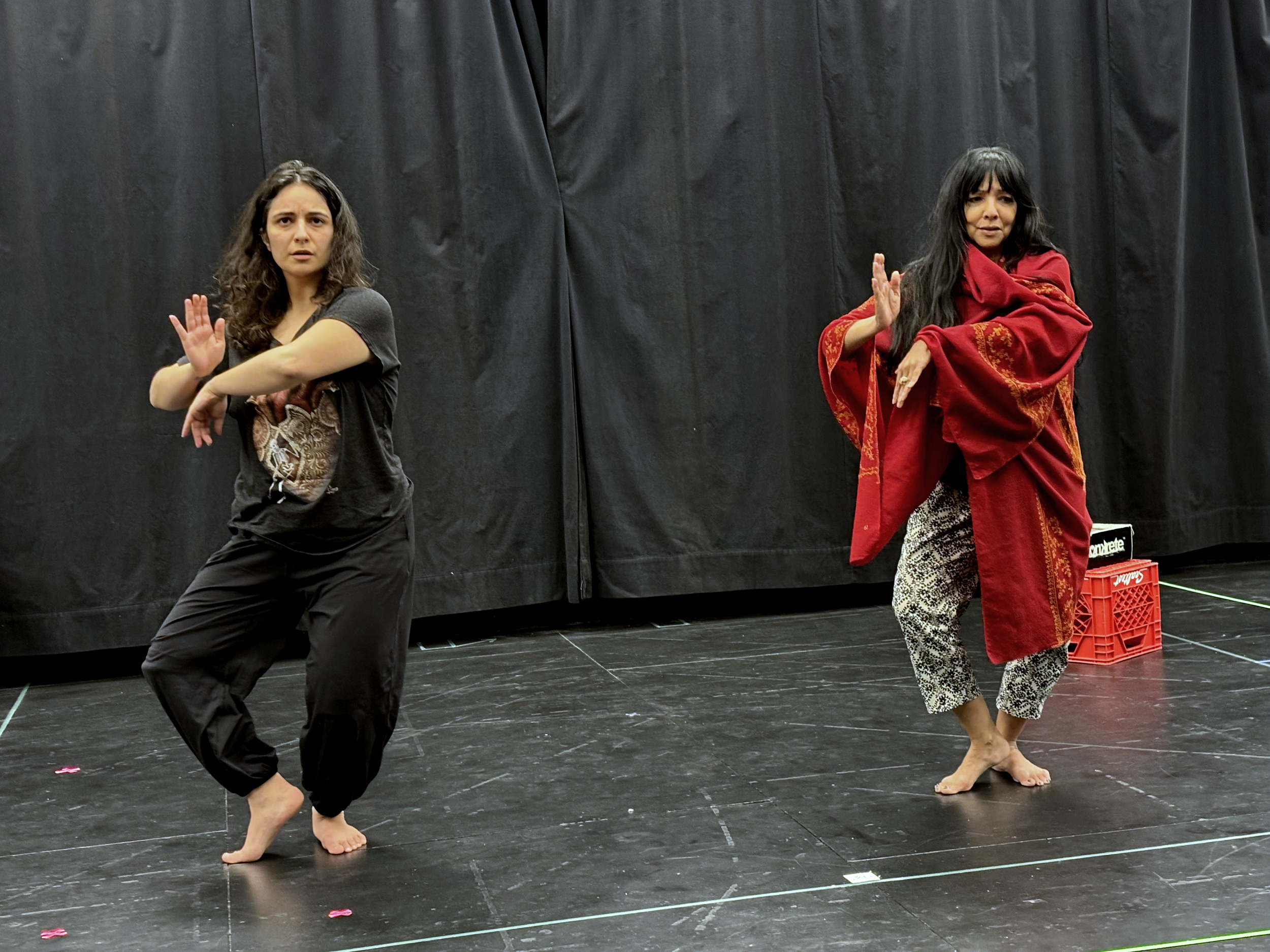
Ghazal Azarbad (Left) and Pamela Mala Sinha (Right)
“But then, also, in our cultural traditions there are nuances and differences in each, of the Persian dance versus Hindu dance,” Azarbad was excited to share.
“I have just always loved moving, especially as a storyteller. And I am just a deeply spiritual person, who loves the art of storytelling that is sacred, as well as practical in the body, to just get the story across. And when Pamela and I were talking at the workshop, we found there's a lot of overlap in the history of Hindu culture and ancient Persian culture, and there's just a lot of synchronicities around the spiritual practices that happened back in the day. Of course, with time and history, there is a lot that has been separated, but we were much more overlapped at a certain point in history. So there's something that is there between us, that is in my blood and that is in her blood, that has somehow been passed down. So it was a very quick shorthand that we had.”
This cultural exchange, embodied by Sinha and Azarbad, has crossed millennia to come together to dance in the service of telling a true story which draws on myth, and rites of passage, and spiritual personal significance is what Canadian theatre can do at its best.
“It transcends any kind of speech – even though we are storytelling, and we are using speech to storytell – we're taking it to the next level, and taking it to a culturally specific place” Fernandez tells us. “And while it lives in a body that's not South Asian, it’s still incredibly specific because it's a dance form. So in the passing onto you, they've shared – Pamela shared, her mom shared – intimately, what things mean.”
Additional support for Azarbad’s performance comes from Alida Esmail, who both our subjects credit with shepherding the process of adaptation that Imago’s production is bringing to the stage, along with a few other credited movement and choreography directors in the room, showing how prioritized this dimension of the show is to this production. “We have stayed very loyal to it in the way that we've kind of kept it in this show because it is this ancient form. I think it'll surprise the audience when it comes up. It sets us in a certain place in a certain mood and a feeling which is exciting in theatre,” says Fernandez.
Azarbad hopes that every audience walks away with something to work through, “In the same way that The Girl is working through something, I hope the audience leaves with that same kind of feeling of questions, curiosities, and this sense of like something still is being worked through – that there is no finality.”
“In a time where the world is so dark, the reminder of the power of love, as cheesy as I sound, and of family” Fernandez adds.
“It propels. It inspires. It persists.”

An ethos of care
Anyone working in Montreal theatre who has been fortunate enough to work with Imago knows the company fosters an intersectional feminist and deeply humanist approach to making theatre. Rooms feel unrushed, emotionally informed, and open to all that the artists are bringing with them into the space. This ethos of care, Fernandez tells us, has aided this production as it hands off a culturally informed and deeply personal role with Pamela Mala Sinha originated to Azarbad’s faithful adaptation of the part. “We're choosing to do a show that is challenging, and which involves a great amount of emotional labour from a single actress, who is telling this story.” Fernandez emphasizes this ethos of care was in place with intention from the earliest stages of preproduction right on through to their first preview, which will be on February 11, “Even from our early workshops with Pamela, sharing some difficult and very intimate things, there was always a sense of care, with the handing over of a piece that's so personal to somebody new, even care around that has been gorgeous. It's really ingrained into our process right now and I'm excited to carry it all the way onto that stage.”
Persisting fiercely for nearly 40 years in Montreal, Imago Theatre selects works which centre intersectional feminist values, and takes those values beyond the stage into their mentorships, artist programs and productions. “The work Imago does is always a catalyst for conversation as we advocate for gender inclusive storytelling, empower diverse voices, foster community and increase accessibility in live performing arts.”
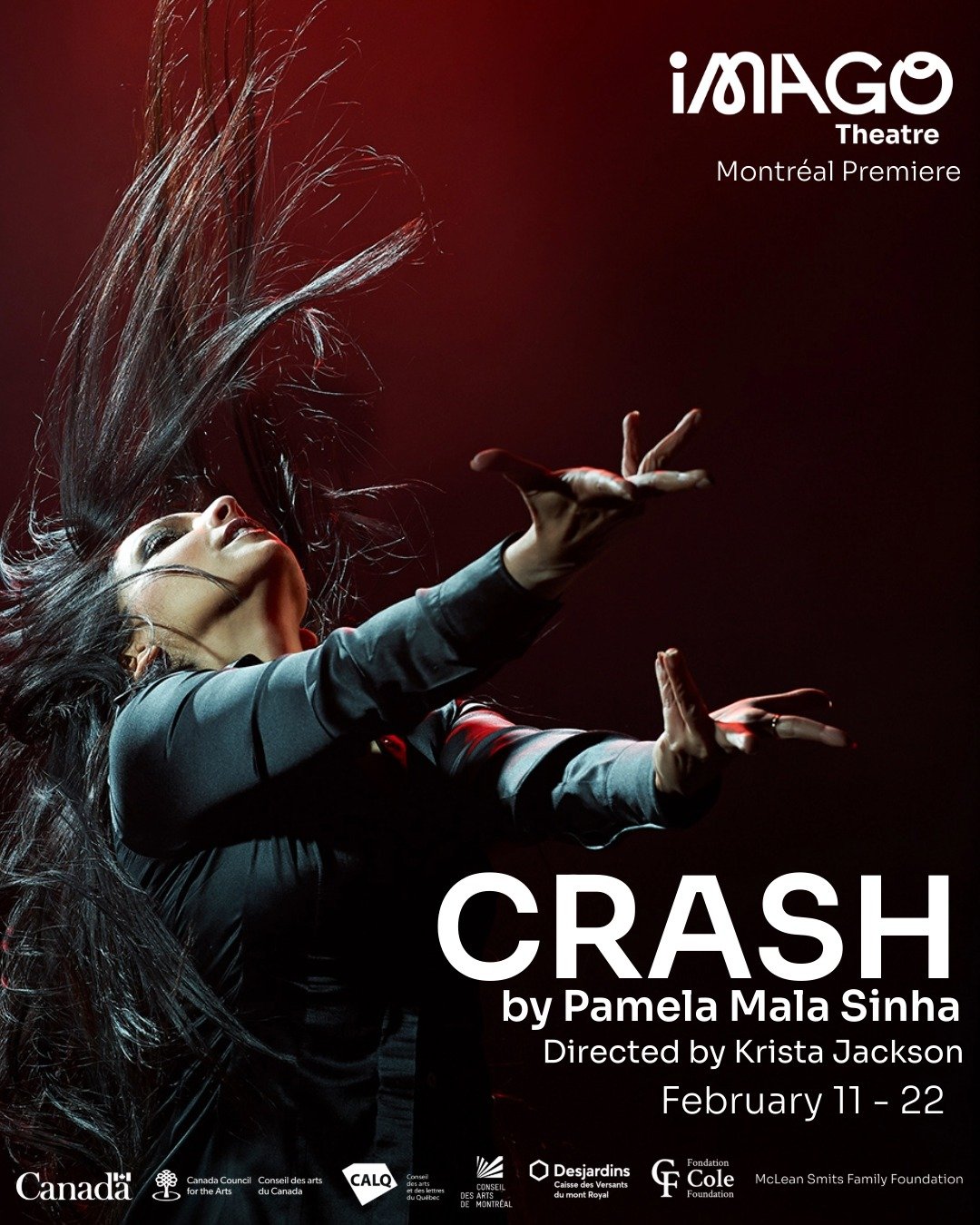
Crash
By Imago Theatre
Running February 11-22, 2026
At the Segal Centre for Performing Arts